Improving the Accessibility Inspection Experience
Redesigning the inspection workflow for accessibility consultants, helping them assess properties, document findings, and evaluate compliance.
01 Overview
A-Check helps accessibility experts evaluate whether spaces meet legal standards
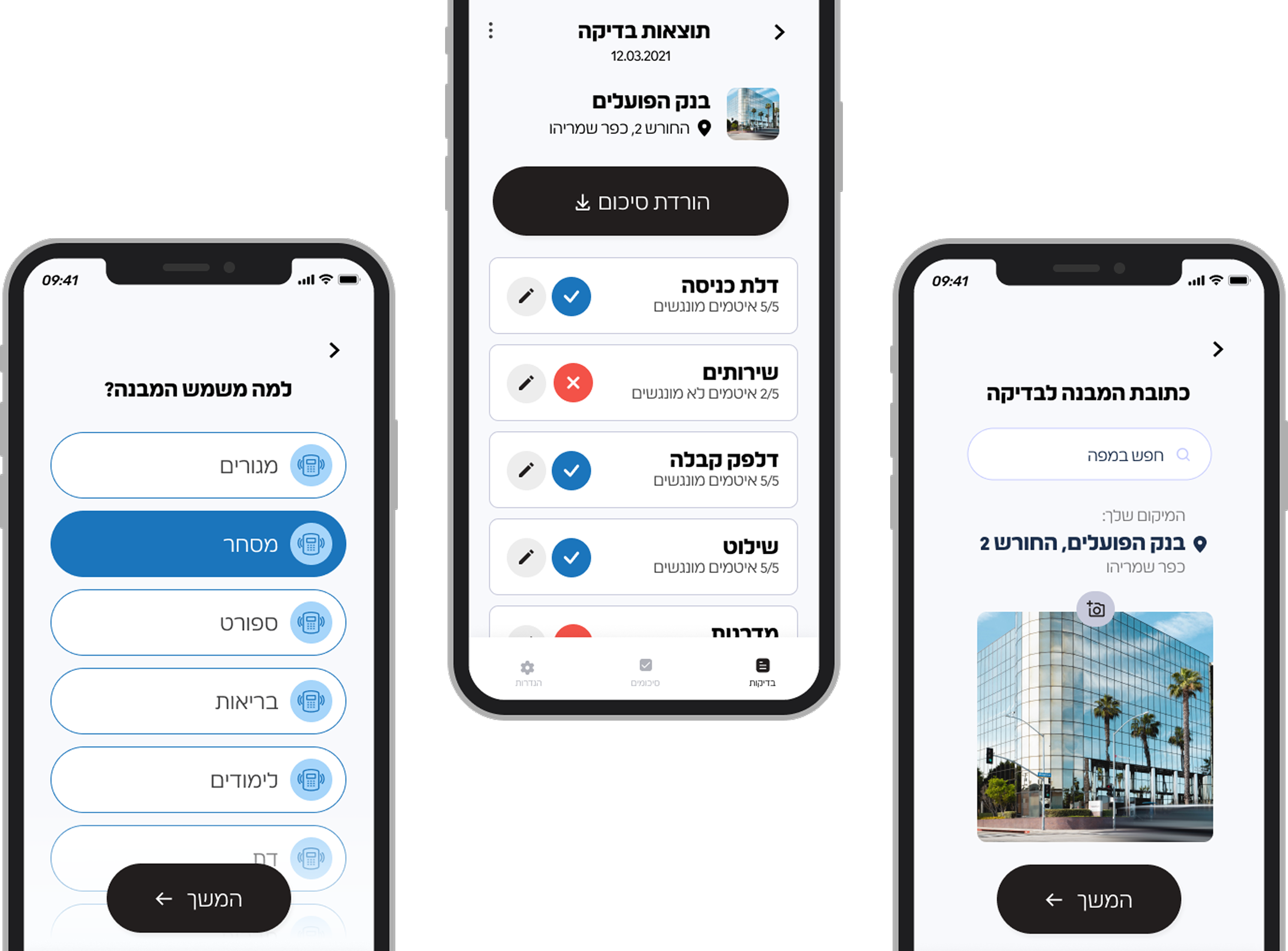
A-Check is a mobile app used by accessibility experts to inspect public and private spaces and assess whether they comply with accessibility regulations. The goal is to ensure places are accessible to people with disabilities and meet legal requirements before use.
Accessibility affects millions of people worldwide
Accessibility is a legal requirement for many public and private spaces. Before a property can operate, accessibility experts evaluate it against structured standards to ensure people with disabilities can access and use the space safely and independently.
1 in 6 people
live with a disability
~1 in 5 people
live with a disability
1 in 4 adults
lives with a disability
Sources: WHO (2023), Gov.il (2022), CDC (2026)
How Inspections Work Today
Accessibility inspections follow a structured evaluation process. Each property type includes multiple physical components - such as entrances, stairs, elevators, and restrooms - that are reviewed against accessibility standards.
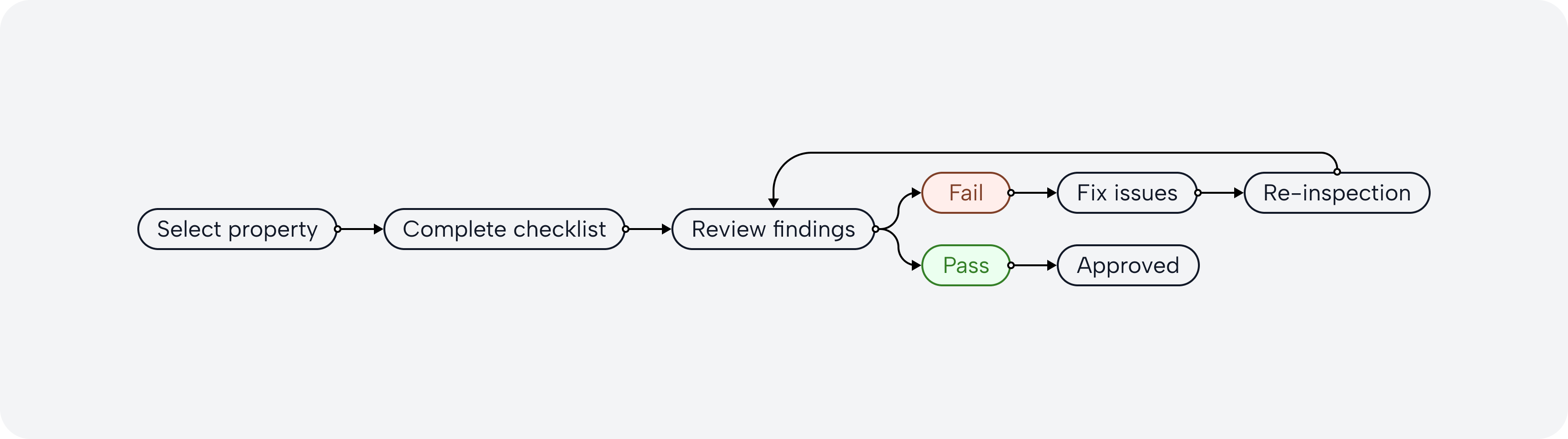
Current inspection journey - from evaluation to approval.
02 Problem
Accessibility inspections are complex and time-consuming
Accessibility experts spend significant time inspecting properties and documenting findings. Reviewing every required standard is often a long and manual process, limiting how many inspections can be completed.
Key challenges
Time-consuming inspections
Experts must manually evaluate every accessibility requirement for each property.
Dependence on physical measurement tools
Inspections require carrying multiple measuring tools such as tape measures, laser meters, slope gauges, and light measurement devices.
Complex documentation process
After each inspection, experts must document findings and prepare detailed compliance reports.
Limited guidance during inspections
Experts are expected to navigate the inspection process on their own, without contextual guidance along the way.
03 Solution
Turn A-Check into a virtual accessibility assistant
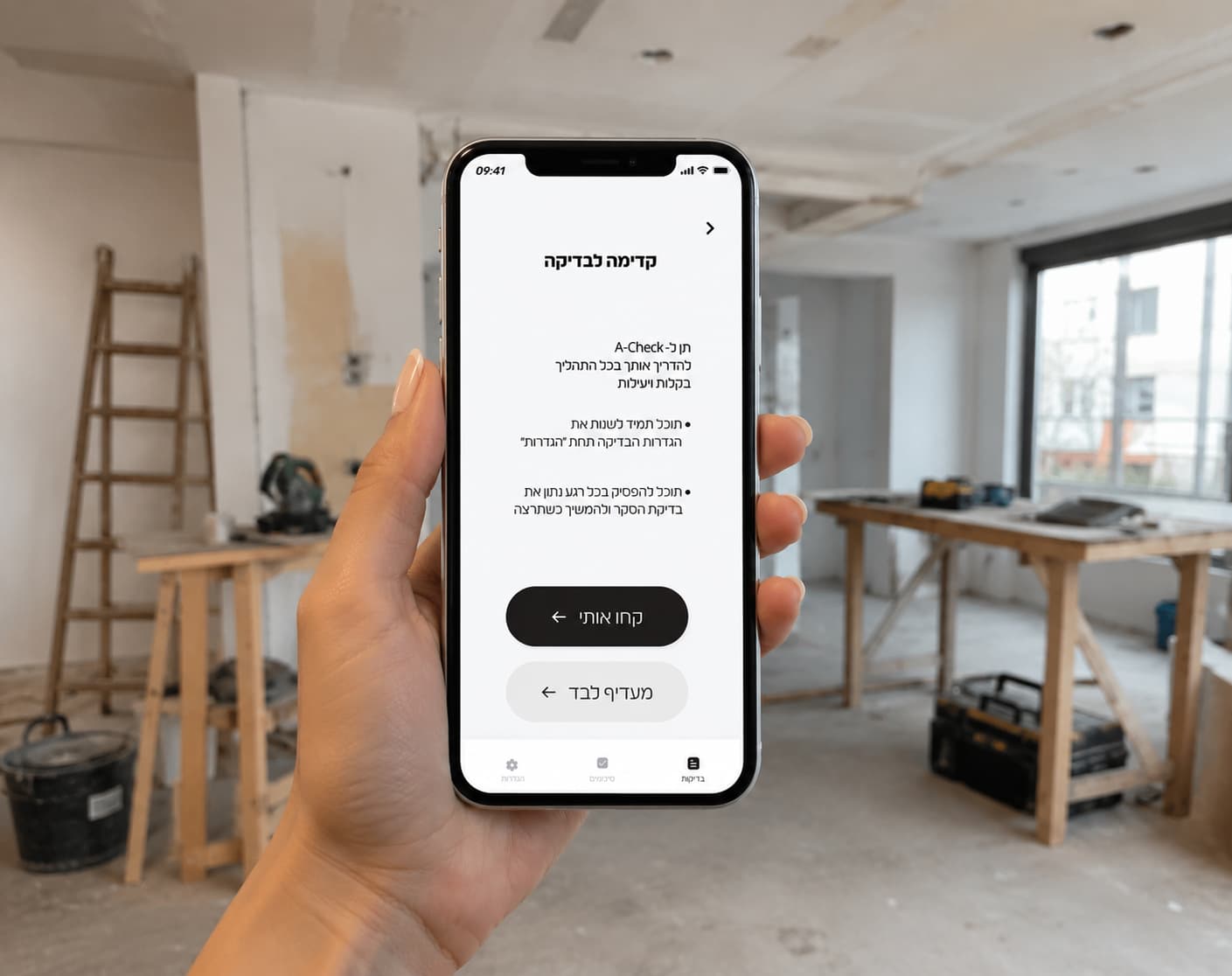
Instead of functioning as a static survey tool, A-Check was redesigned to actively guide experts through the inspection process step by step based on the property being evaluated - making inspections faster, clearer, and more structured.
04 Research
Understanding the people, process, and business behind accessibility inspections
To better understand the problem space, we explored the company's business model and researched the workflows, challenges, and needs of accessibility consultants, the primary users of the system.
Business model
The company's business model relied heavily on customer support, including training, tailored survey templates, and expert involvement throughout inspections. This revealed an opportunity to create a more guided experience that would help users work more independently while enabling the company to scale more efficiently and invest resources in future growth.
Target audience
A-Check is designed for certified accessibility consultants - professionals legally authorized to conduct accessibility inspections. These experts typically come from two professional backgrounds:
Therapeutic Professionals
Therapists, physiotherapists, psychologists
Engineering Professionals
Architects, engineers, practical engineers
User persona
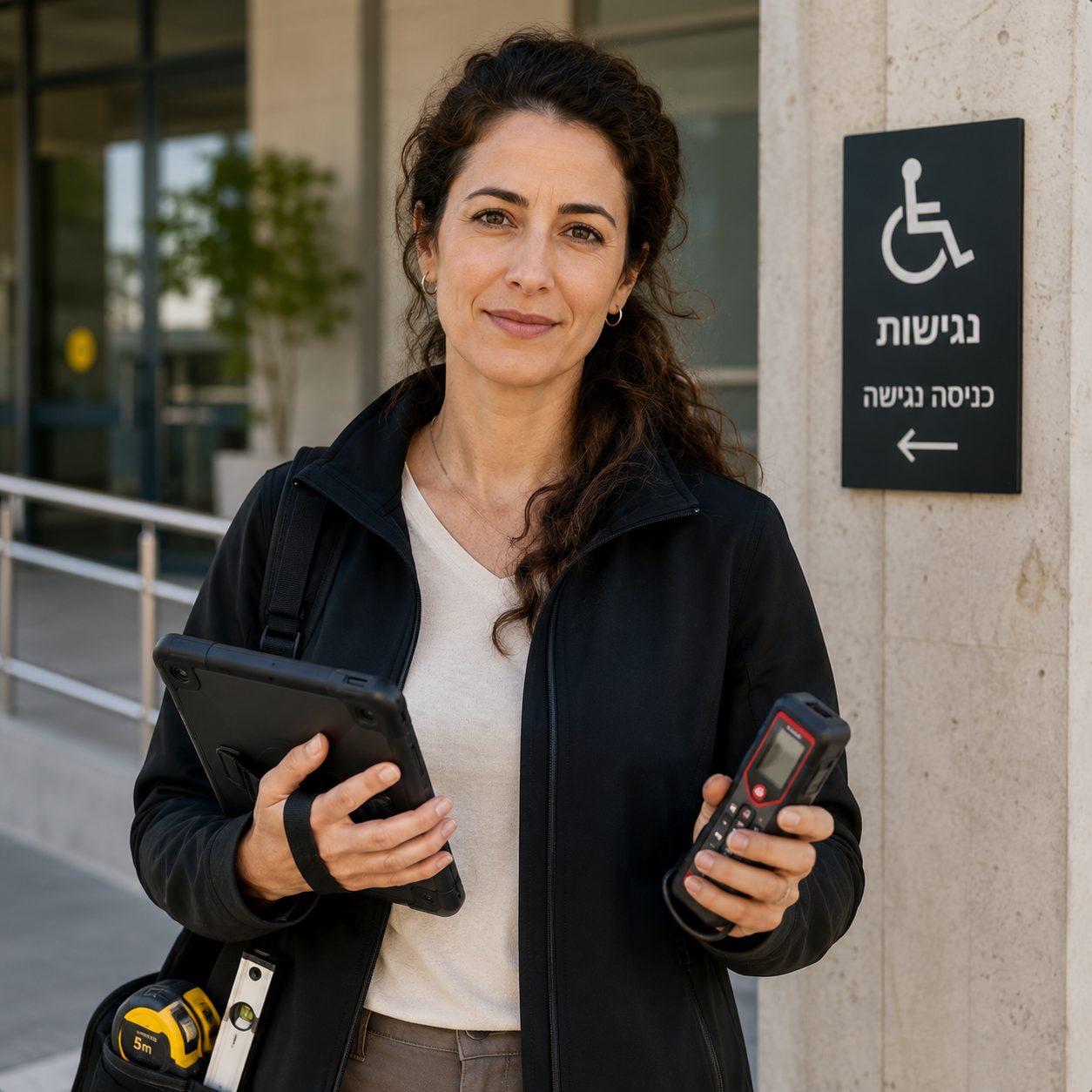
Yael Ben-David

I want inspections to feel structured and reliable, without worrying that I might miss something important.

About
Yael is a certified accessibility consultant with a background in civil engineering. She conducts inspections for public and private buildings, ensuring they meet legal accessibility standards. Working independently in the field, she manages multiple inspections while documenting findings accurately under tight time constraints.
Goals
- Complete inspections more efficiently without sacrificing accuracy
- Reduce time spent on documentation and reporting
- Feel confident no accessibility requirements were missed
- Quickly understand what to check at every step
Frustrations
- Long and manual inspection processes
- Keeping track of complex requirements during inspections
- Carrying multiple measurement tools throughout inspections
- Fear of missing important requirements or documentation
Key insights
The following insights emerged from our research and helped us better understand the challenges consultants face throughout the accessibility inspection process.
Complex accessibility requirements create cognitive overload
Consultants need to review and apply many requirements during inspections, making the process mentally demanding and time-consuming.
Lack of step-by-step guidance
The current process provides little guidance, requiring consultants to rely heavily on prior knowledge and professional experience.
Manual documentation increases the risk of missing information
Findings are often documented manually and reviewed later, increasing the risk of incomplete or inaccurate records.
Consultants work across diverse property types
Consultants inspect a wide range of environments and must understand how accessibility requirements apply to different property types.
Inspections rely on multiple physical tools
Multiple measurement tools are required throughout the process, making inspections more physically demanding and time-consuming.
05 Design
From research to solution
Guided by our research insights, we designed a streamlined mobile experience that helps simplify complex accessibility inspections.
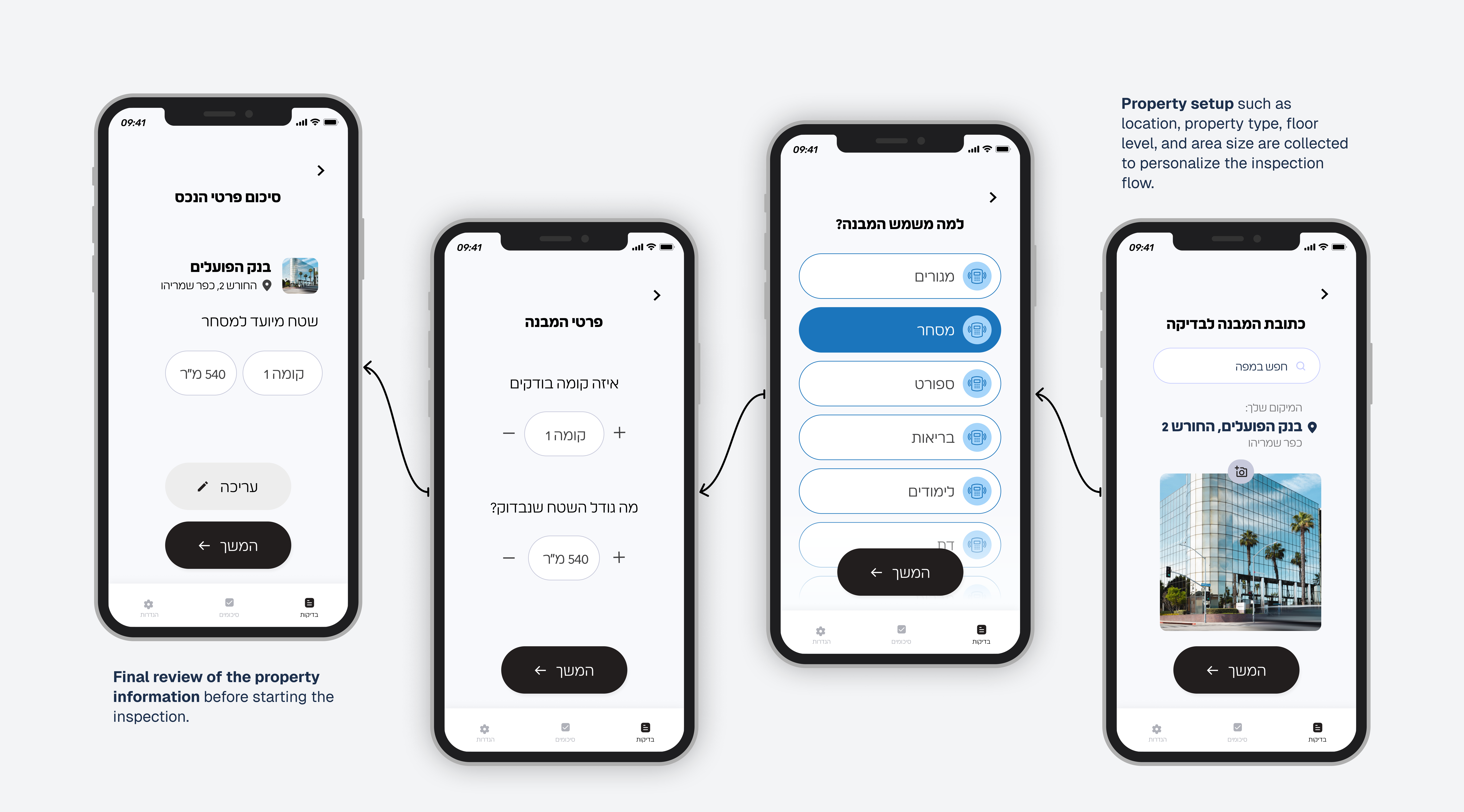
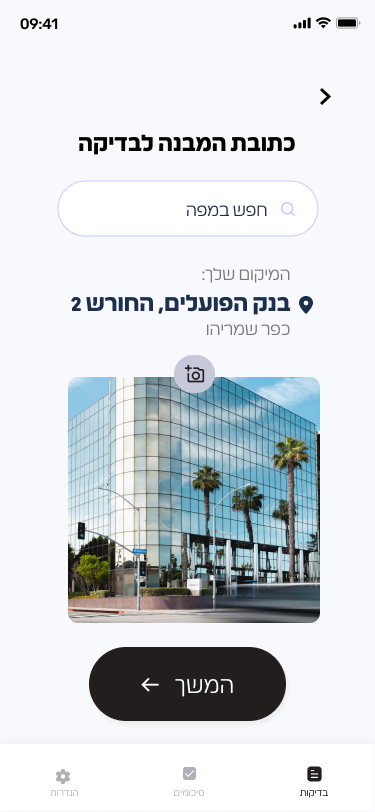
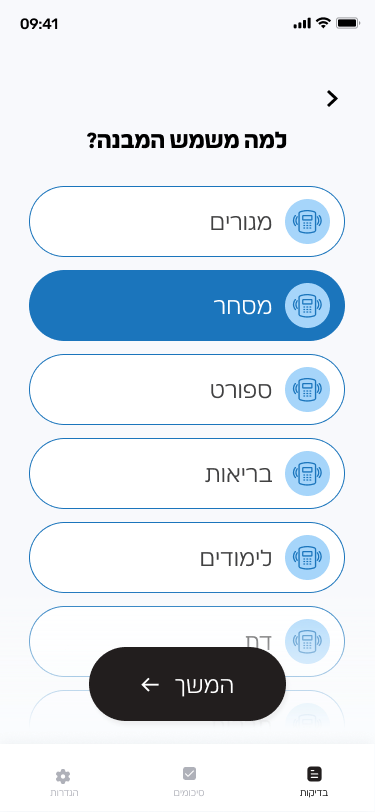
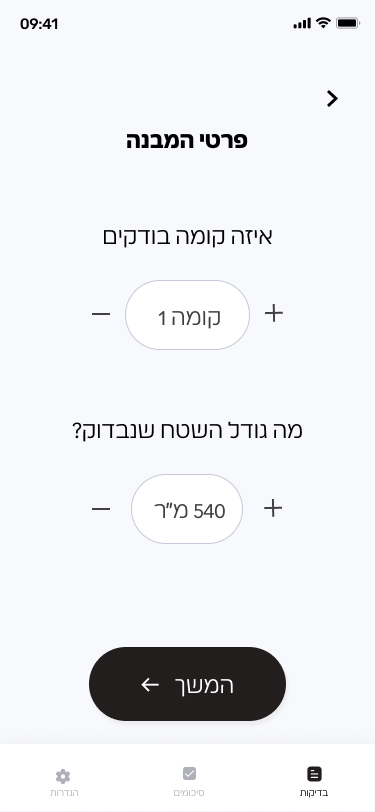
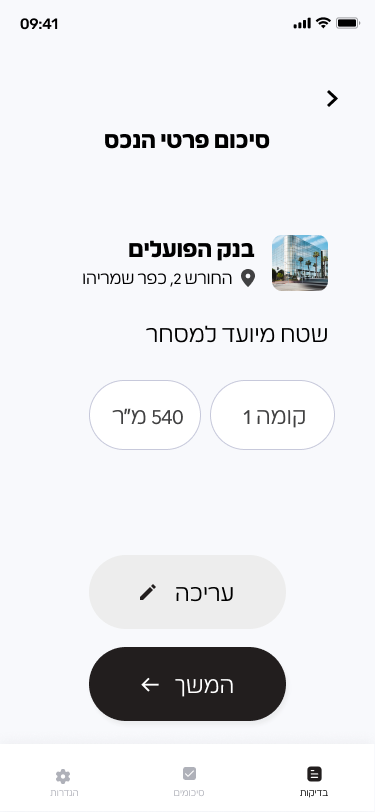
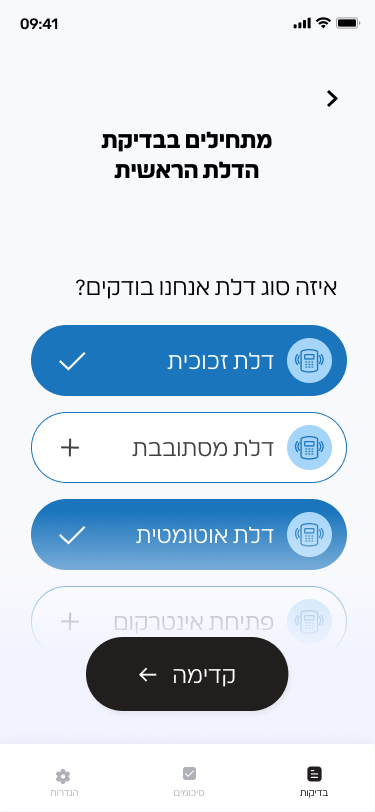
Setting up the property inspection
The app guides inspectors through a series of questions to collect key property details, ensuring that only relevant accessibility requirements are included in the inspection.
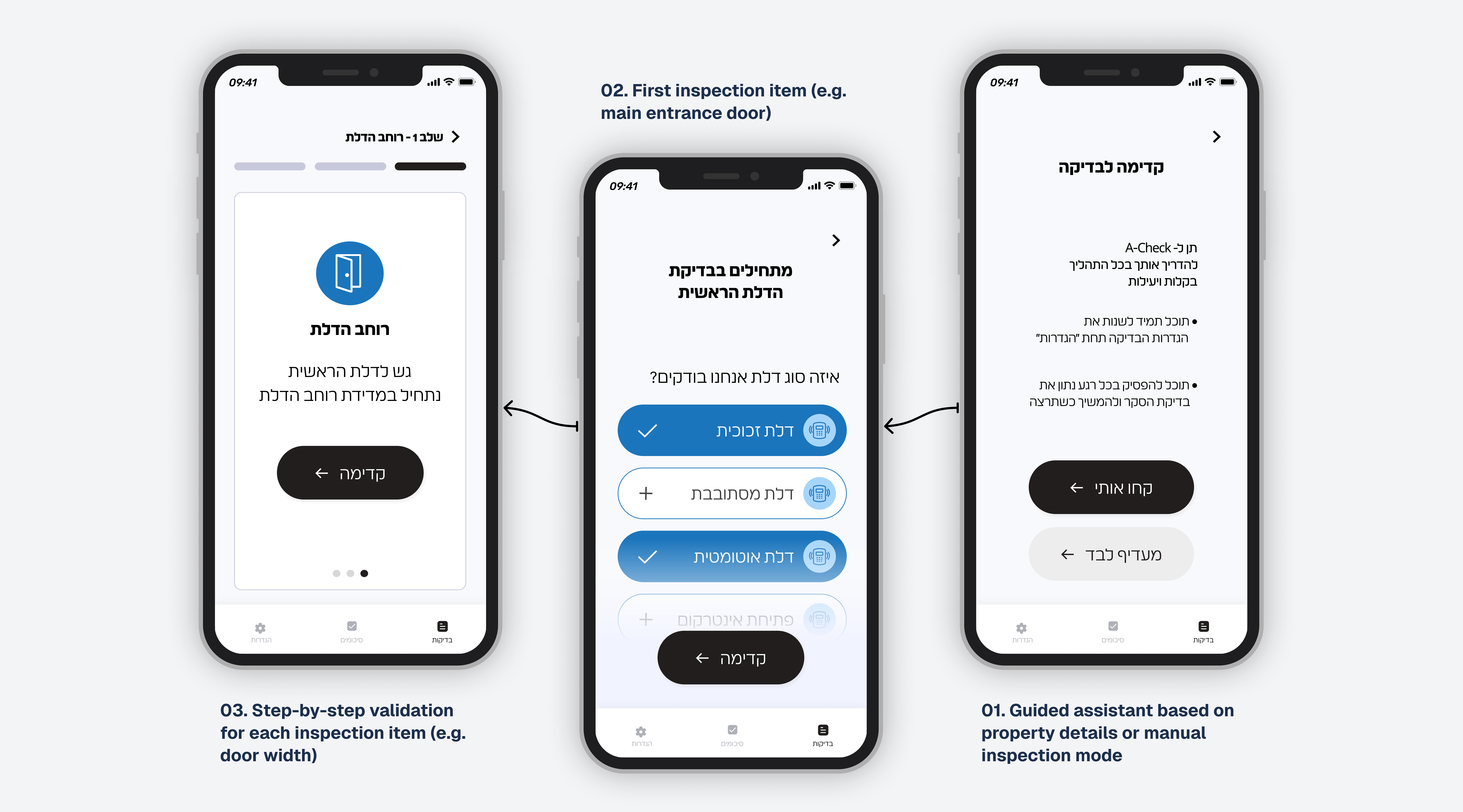
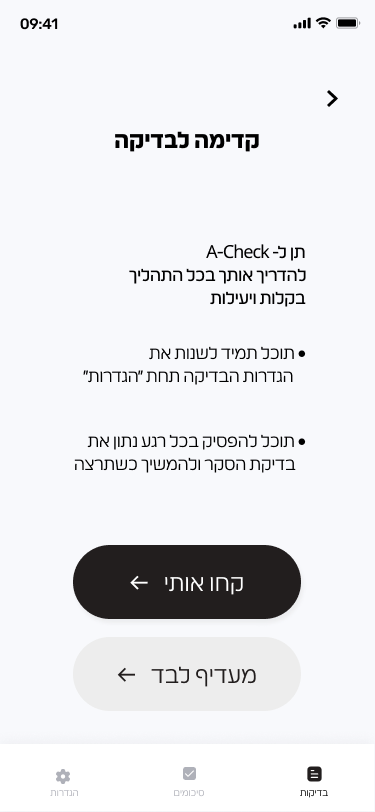
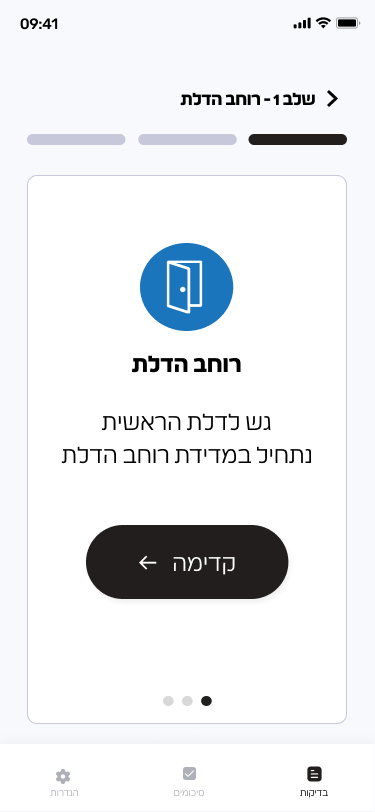
Let A-Check lead the inspection
Inspectors can complete inspections manually or choose a guided mode, where A-Check leads them step by step through relevant accessibility items based on the selected property type, ensuring every requirement is properly checked.
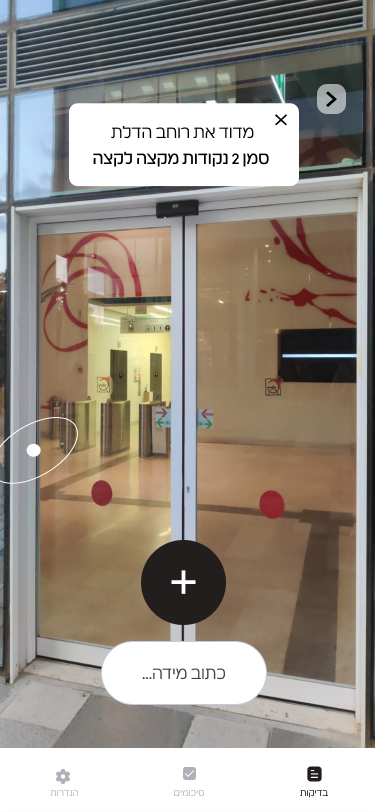
Simplifying measurements with mobile tools
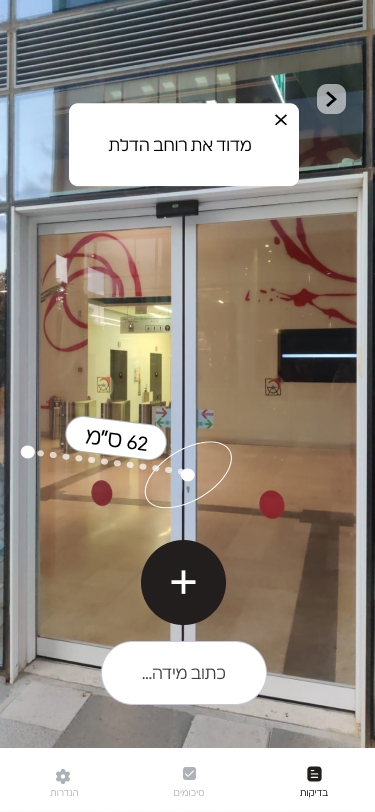
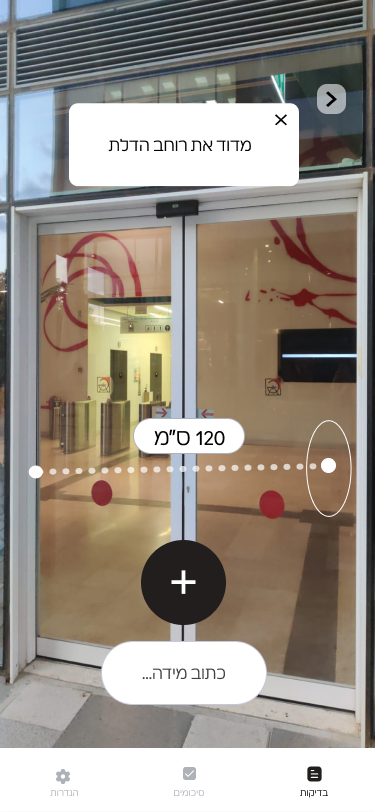
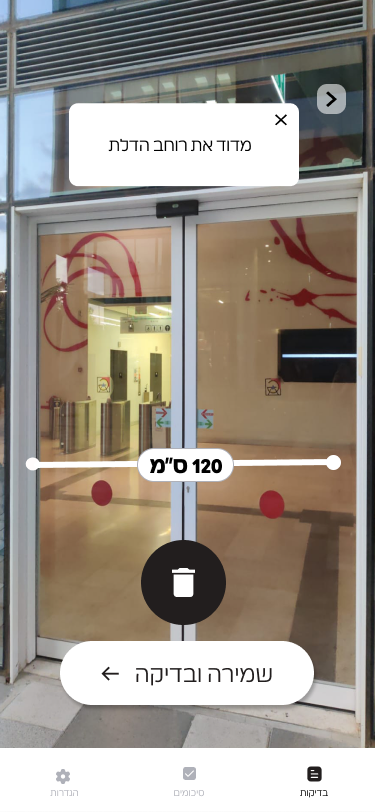
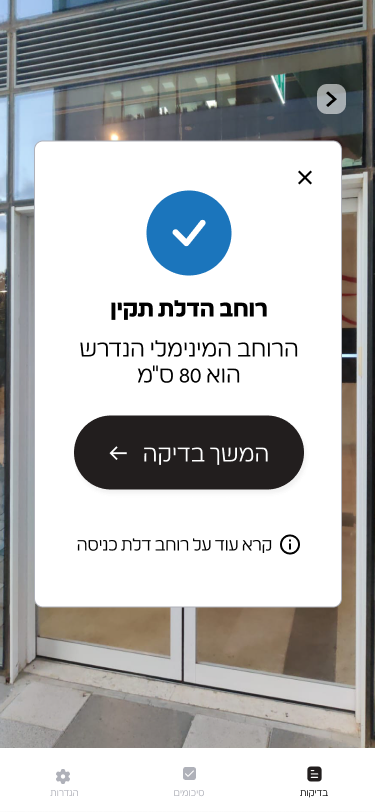
A-Check uses built-in mobile measurement tools to simplify accessibility checks and reduce the need for external equipment. Measurements are validated instantly against accessibility requirements, while still allowing manual verification when needed.
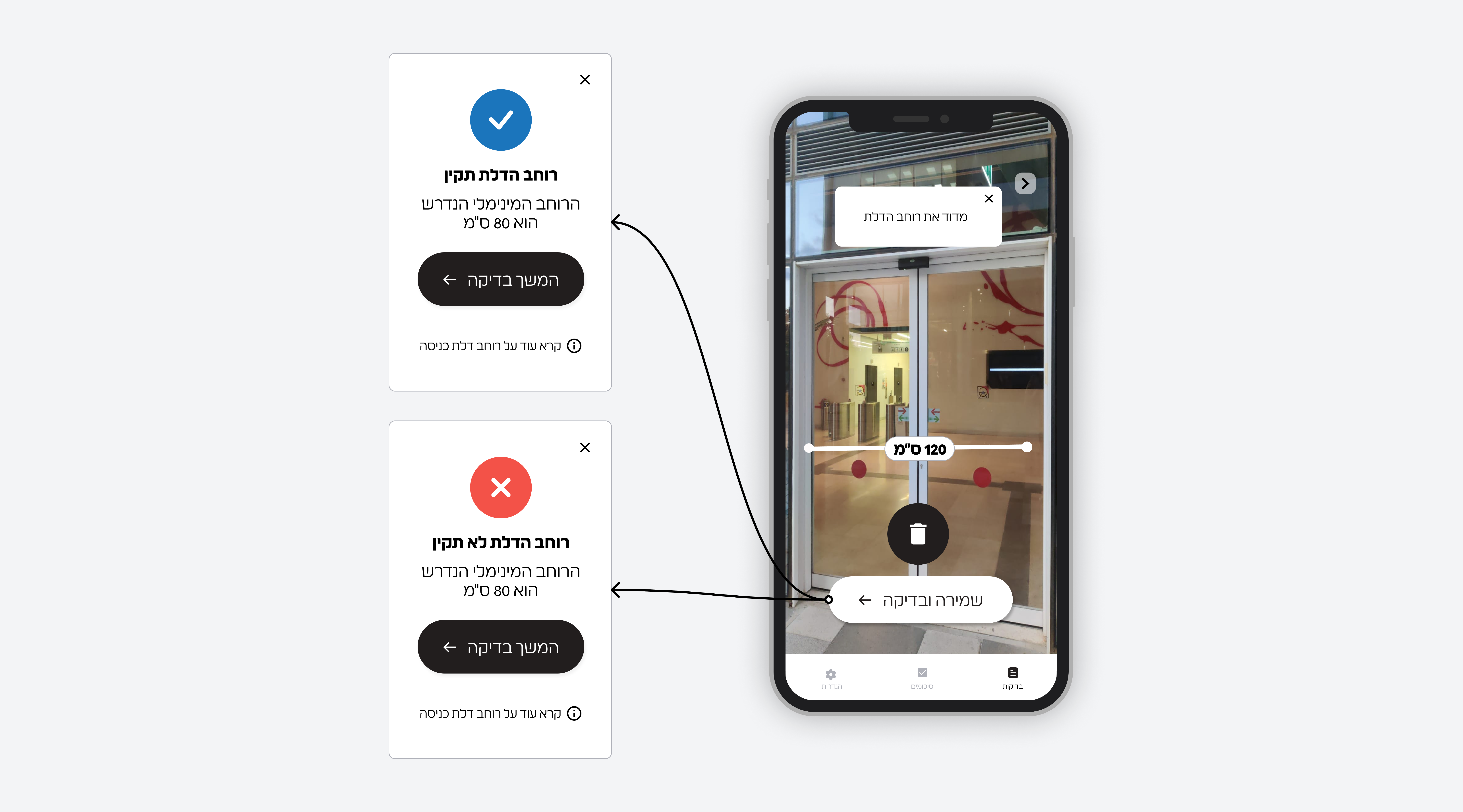
In this example, door width is checked against accessibility standards and instantly marked as pass or fail. Measurements can be taken directly in the app or entered manually.
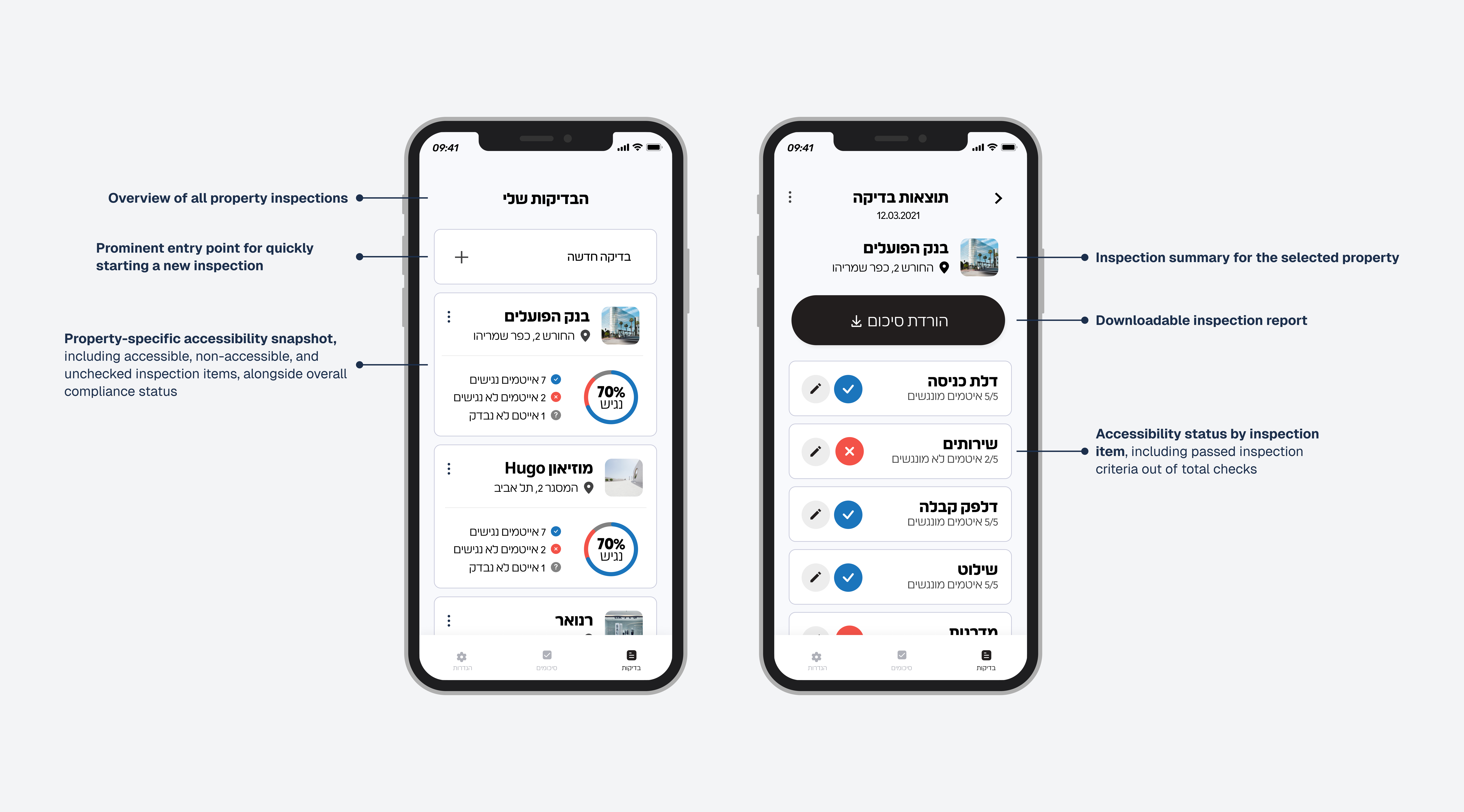
Inspection results & compliance overview
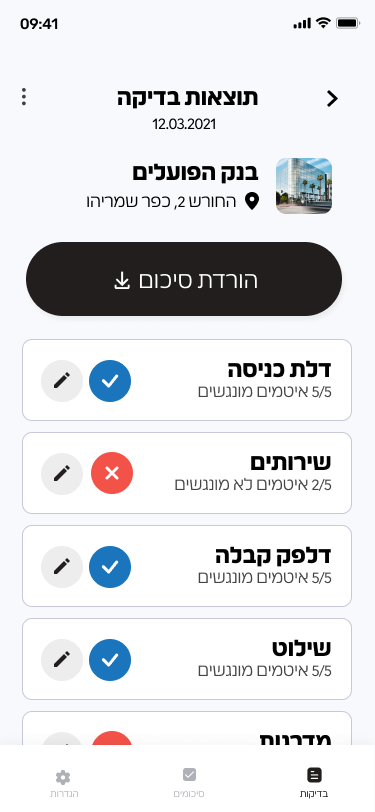
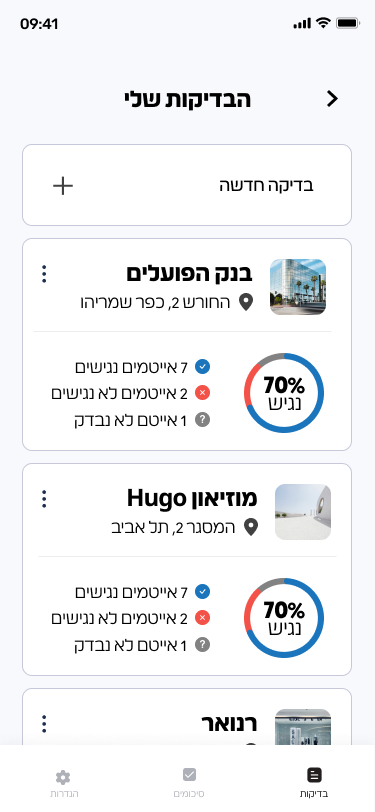
Once the inspection is complete, inspectors can review detailed findings, track passed and failed items, and generate a report for documentation and follow-up actions. A-Check also provides a high-level compliance overview across inspected properties.
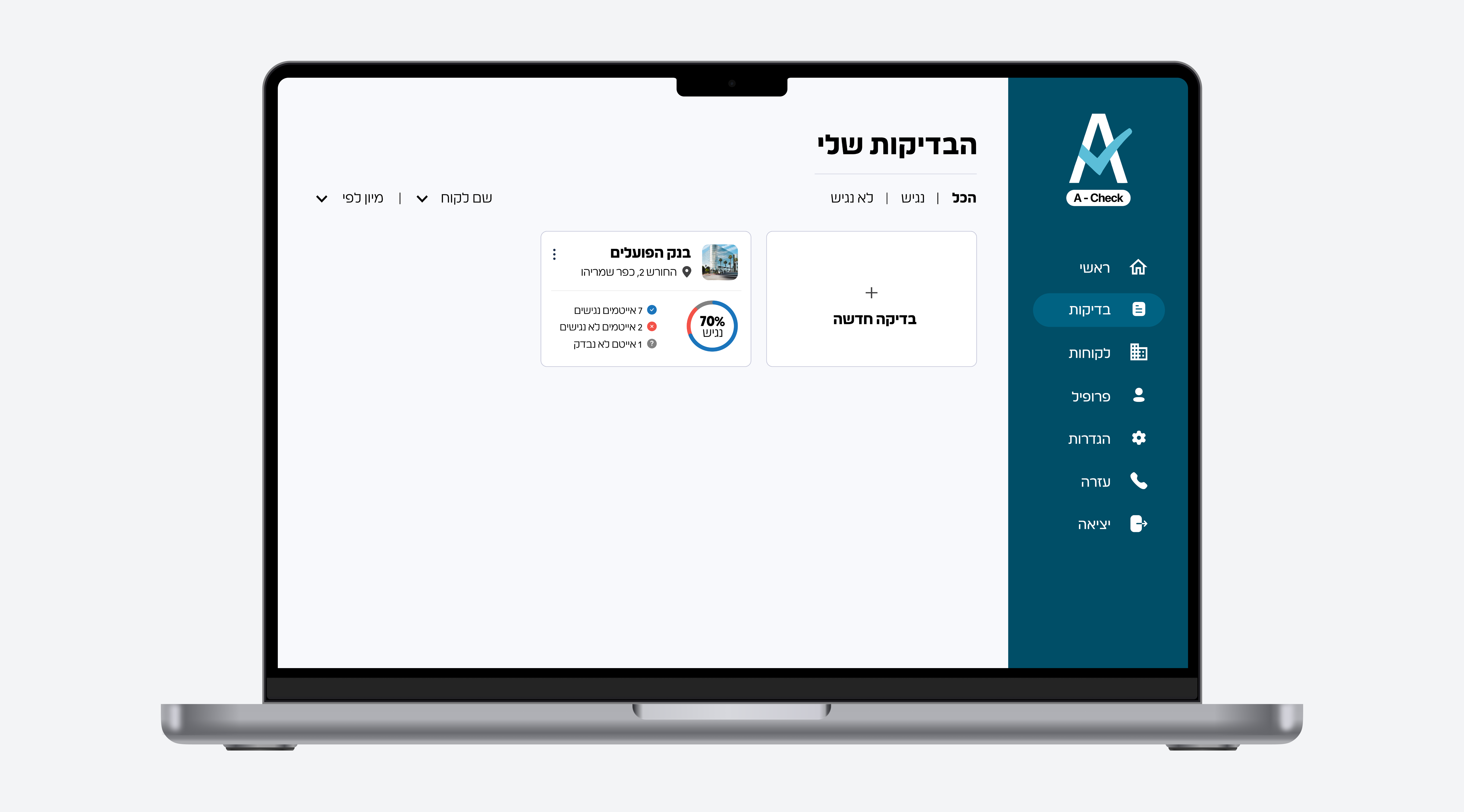
From fieldwork to office review
While inspections are conducted on-site through a mobile device, the desktop experience provides a centralized workspace for reviewing results, tracking compliance across properties, and managing inspections more efficiently.
06 Outcome & Learnings
Positive leadership feedback
The final concept was presented to the company's CEO and management team, receiving highly positive feedback on the clarity of the redesigned experience and its potential to simplify accessibility inspections.
Validating the experience through usability testing
Usability testing helped validate the overall flow and reinforced the value of a more guided and structured experience, while preserving flexibility through a manual inspection option.
Designing for complex real-world workflows
This project highlighted the challenge of simplifying a complex, regulation-heavy workflow into a more intuitive experience. Given more time, the next step would be testing the solution with certified accessibility consultants in real inspection environments.
Disclaimer - This project was created as part of a UX design course in collaboration with Tamar Accessibility. The redesign was developed voluntarily with the company's permission for educational and portfolio purposes. All rights to the original product and platform belong to Tamar Accessibility.